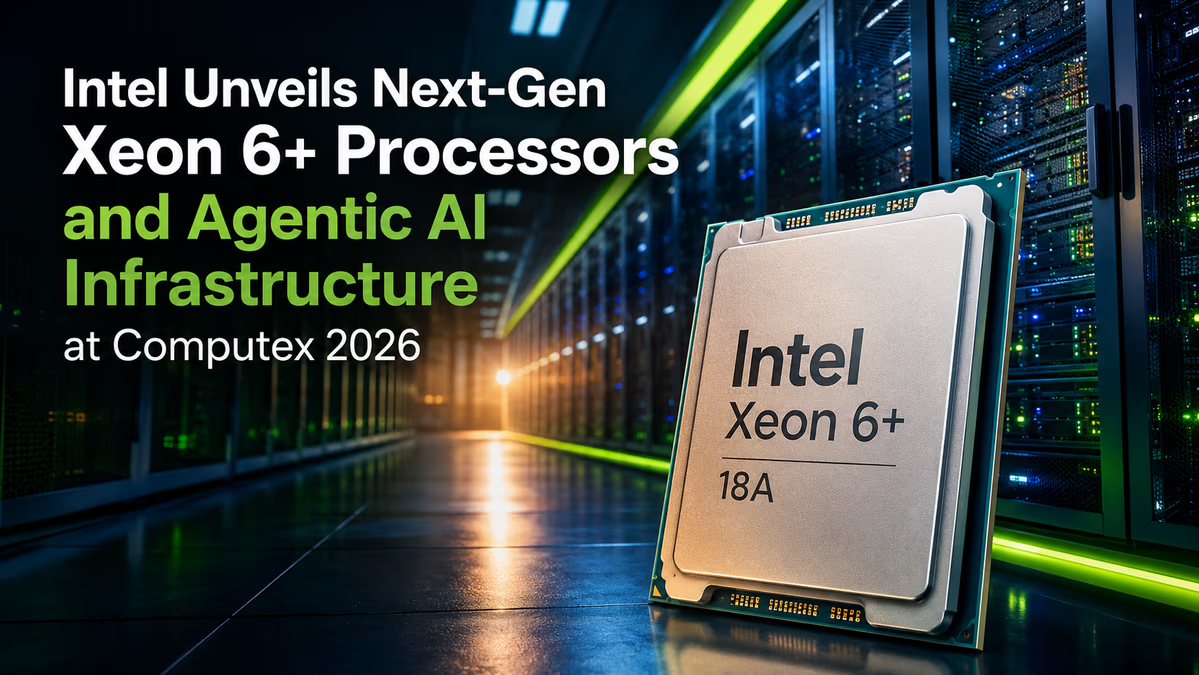
Intel Unveils Next-Gen Xeon 6+ Processors and Agentic AI Infrastructure at Computex 2026
Intel targets agentic and inference AI workloads at Computex 2026 with new Xeon 6+ processors and rackscale infrastructure collaborations.
TAIPEI, Taiwan — Intel CEO Lip-Bu Tan kicked off Computex 2026 by showcasing a major strategic pivot toward system-level artificial intelligence deployment, aiming to challenge competitors like NVIDIA with a portfolio optimized for "agentic" AI and scaled inference. Delivering his keynote on June 2, 2026, Tan presented a range of new solutions extending from silicon to rackscale data center designs, designed to meet the growing physical, economic, and power demands of enterprise AI.
"For more than five decades, Intel, its ecosystem partners, and Taiwan have brought the world the foundational technologies for the PC, Internet, and now AI eras," Tan told the Computex audience. "Today, with the rise of inference, agentic, and physical AI, Intel is poised to bring the world new innovations from the chip to systems level that promise to transform industry and society for the better."
The Shift to Inference and Agentic AI
As enterprise AI models mature from experimental training phases into full-scale production, the tech sector is seeing an exponential surge in demand for cost-effective, power-efficient inference systems. This shift has also highlighted the rise of agentic AI—autonomous workloads where systems must iterate through complex processes of planning, executing, and reflecting.
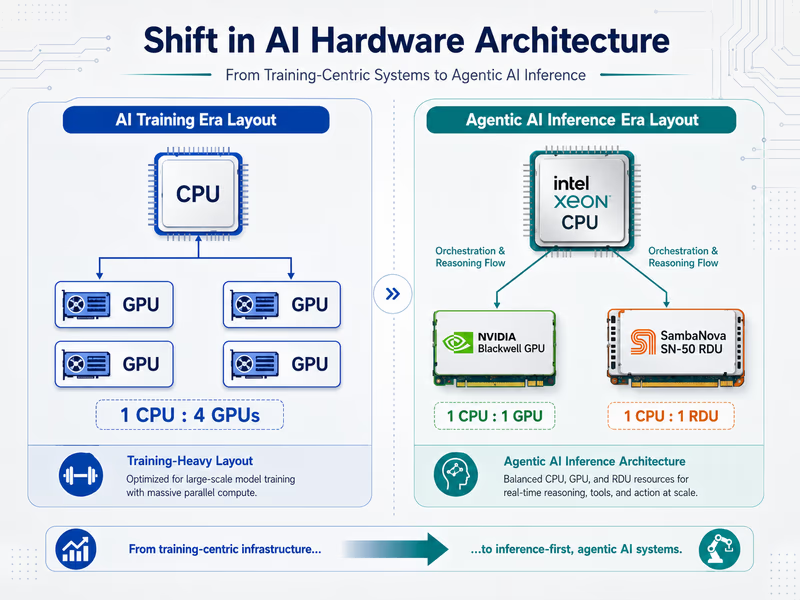
While AI training relies heavily on parallel graphics processing units (GPUs), agentic reasoning is driving an unprecedented demand for central processing units (CPUs) to orchestrate these iterative workflows. Consequently, the traditional training-era hardware ratio of one CPU to every four GPUs is shifting toward a balanced one-to-one ratio, positioning high-performance CPUs as crucial anchors in modern data centers.
Inside the Xeon 6+ 'Clearwater Forest' Architecture
At the heart of Intel’s strategy is the Xeon 6+ processor family, codenamed "Clearwater Forest." Built on the cutting-edge Intel 18A process technology, these chips are engineered specifically for high-density, scale-out cloud workloads.
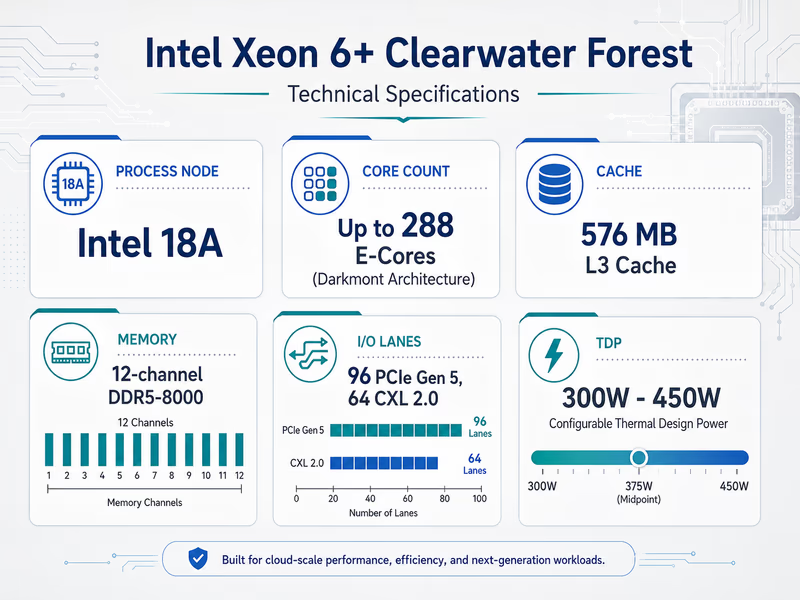
Each processor socket packs up to 288 efficient-cores (E-cores) built on the Darkmont architecture, alongside a massive 576 megabytes of last-level cache. To eliminate data bottlenecks, the platform supports 12-channel DDR5-8000 memory, 96 PCIe Gen 5 lanes, and 64 CXL 2.0 lanes. Thermal Design Power (TDP) ranges from 300W to 450W, depending on the configuration.
"That is why we are excited to have Intel Xeon 6+ introduced at COMPUTEX this week," said Kevork Kechichian, Executive Vice President of Intel’s Data Center Group. "It has 288 E-cores, a massive 576 megabytes of L3 cache built with our Intel 18A technology, and we can't emphasize enough the value of Intel technology that brings to data center products."
To further bolster data center networks, Intel also introduced its new Ethernet E835 Controllers and Network Adapters, delivering network speeds of up to 200Gb to handle high-volume server traffic.
Driving Rackscale Solutions and Industry Partnerships
Recognizing that individual chips are no longer sufficient to solve enterprise AI problems, Intel is introducing "Rackscale Blueprints" using open standards. Chief among these system-level initiatives is a key partnership with electronics manufacturer Foxconn.
"Intel and Foxconn are working together to develop rack scale products built upon Intel Xeon processes," stated Jerry Hsiao, Chief Product Officer of Foxconn. "Together, we will focus on exploring the development, integrations and commercialization of differentiated rack scale AI infrastructure solution, leveraging complementary architecture to address diverse AI workload requirements."

Beyond Foxconn, Intel announced strategic collaborations with Siemens to expand use cases for purpose-built Intel silicon in robotics, edge devices, and high-performance computing (HPC). Additionally, Hitachi intends to collaborate with the company on foundry tools and quantum computing, while Echo Neurotechnologies and Greenstone Biosciences will work with Intel to deliver integrated vertical customer solutions.
Intel is also leveraging its hardware ecosystem in Vector Core Compute, an "Agentic Cloud Offering for Disaggregated Inference" unveiled by Vista Equity Partners and Cambium Capital. This architecture pairs Intel Xeon processors with SambaNova SN-50 Reconfigurable Dataflow Units (RDUs) and NVIDIA Blackwell GPUs.
From Client PCs to Handhelds
While server hardware dominated the keynote, Intel also highlighted its momentum in consumer-facing AI. The Core Ultra Series 3—Intel's first client product manufactured on the Intel 18A node—is already integrated into over 325 consumer and commercial PC designs.
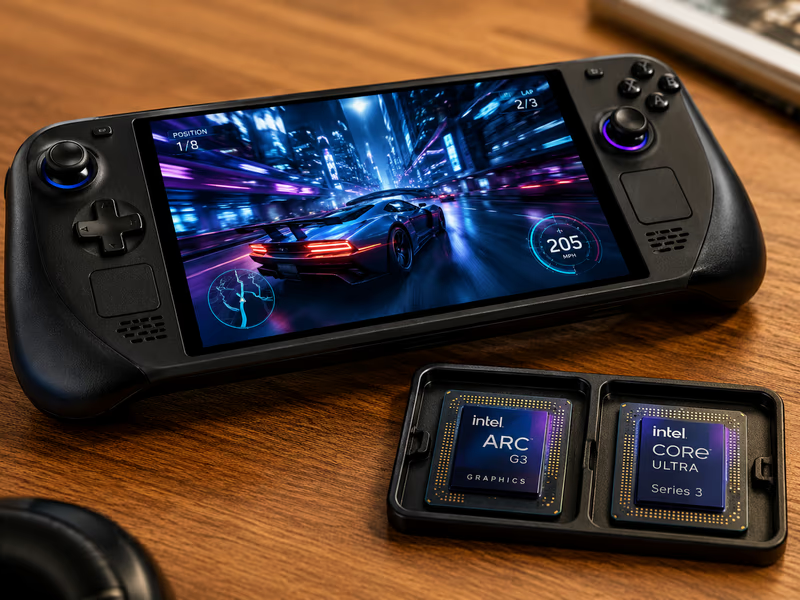
Expanding on this client architecture, Intel showcased its new Arc G3 series of graphics units, optimized specifically for handheld gaming devices. Additionally, a new partnership with Phison Electronics was announced to extend memory capabilities for AI PCs, allowing them to support significantly larger on-device AI models.
Looking Ahead
Though the event focused primarily on immediate hardware rollouts, rumors circulated throughout the Taipei International Convention Center. Unverified reports ahead of the show suggested that a preview of Intel's next-generation desktop processor family, codenamed "Nova Lake," would be showcased. However, no official confirmation or preview was shared by Intel during Computex.
Intel did provide a road map for its future silicon, confirming that Crescent Island—its forthcoming data center GPU built on the Xe3P architecture—is targeting customer sampling in the second half of 2026. Conversely, the company confirmed that Diamond Rapids, its next-generation big-core Xeon silicon, will not be released until 2027.
By focusing heavily on hybrid computing models, disaggregated inference, and physical AI, Intel is positioning itself to capture the massive economic transition from cloud-centric model training to ubiquitous, multi-device model inference.