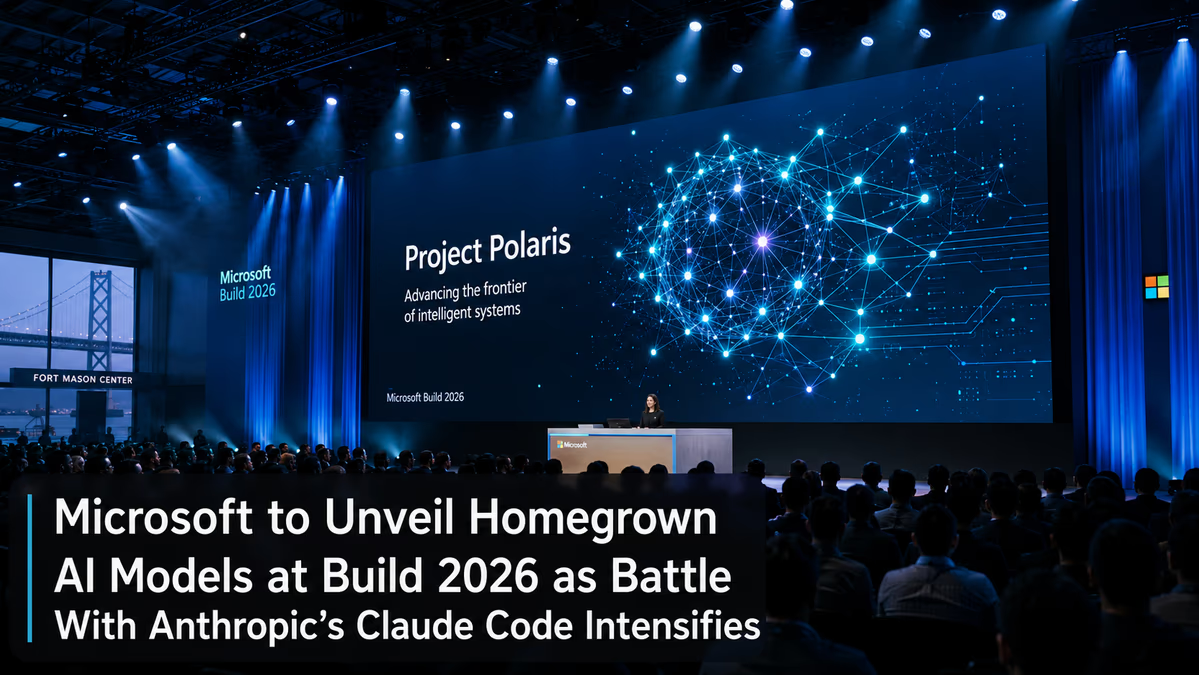
Microsoft to Unveil Homegrown AI Models at Build 2026 as Battle With Anthropic’s Claude Code Intensifies
Microsoft will reportedly unveil homegrown AI models, including coding model Project Polaris, at Build 2026 to challenge Anthropic's Claude Code.
Microsoft is preparing to unveil a new suite of homegrown artificial intelligence models at its upcoming Build 2026 developer conference, scheduled for June 2-3 in San Francisco, California. The strategic initiative marks a decisive effort by the Redmond-based tech giant to reduce its reliance on external AI providers and reclaim ground lost to rising competitors like Anthropic.

Central to this launch is a specialized coding model, internally referred to as "Project Polaris." Designed to enhance GitHub Copilot's competitiveness and regain market share, Project Polaris is explicitly built to challenge Anthropic's Claude Code. In addition to Polaris, Microsoft's new homegrown suite is expected to feature models specializing in transcription, reasoning, speech, and image processing.
The Strategic Shift to AI Ownership
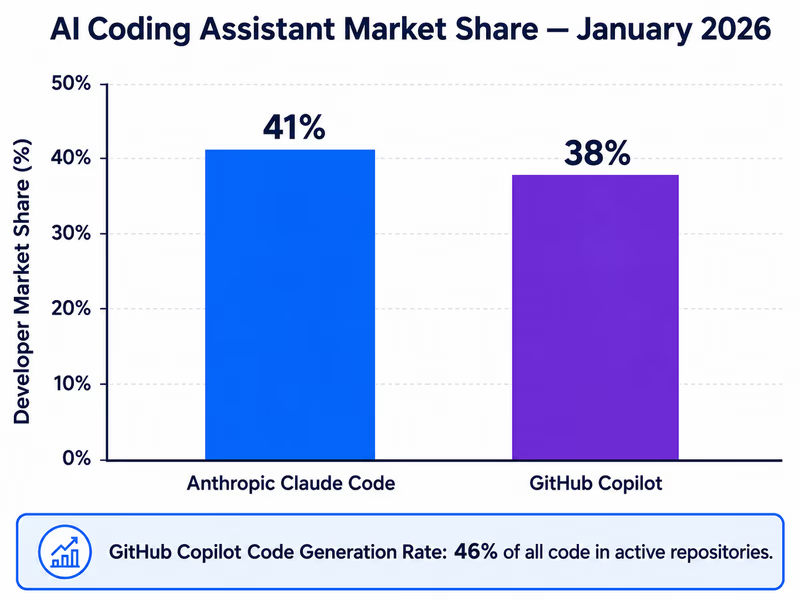
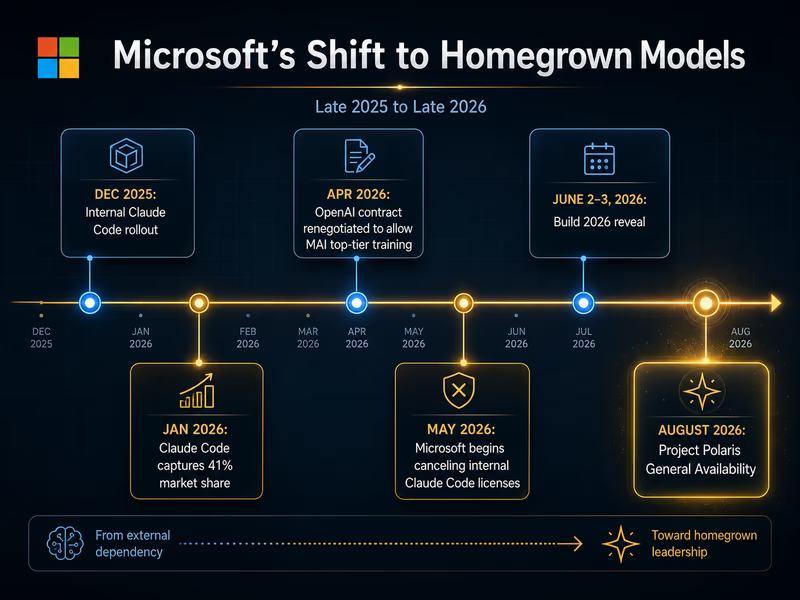
For several years, Microsoft has leveraged deep partnerships with external AI companies, most notably OpenAI, to power its consumer and developer AI ecosystems. However, the rapidly evolving market has introduced friction. Recent unconfirmed reports indicate that Anthropic's Claude Code has gained significant traction, surpassing GitHub Copilot in enterprise developer adoption. By January 9, 2026, Claude Code reportedly captured a 41% market share among professional developers, edgeing out Copilot's 38%. While GitHub Copilot still generates 46% of all code in repositories where it is installed, the competitive shift has put pressure on Microsoft to act.
This pressure has been felt internally as well. A leaked internal memo from a Microsoft executive named Warren, paraphrased by People Matters, revealed that Claude Code had become perhaps a little too popular among Microsoft engineers, with many of the company's own developers preferring Anthropic's tool over Microsoft's own AI coding systems. Since December 2025, Microsoft had provided thousands of its employees with access to Claude Code.
However, the high costs associated with token-based billing for Claude Code's extensive usage forced a financial reassessment. On May 15, 2026, Microsoft began canceling most internal Claude Code licenses, directing its developers to transition to the GitHub Copilot CLI instead. The firm has set a final deadline of June 30, 2026, for the complete termination of these internal licenses, underscoring the growing economic pressure on enterprise AI deployment.
The Rise of MAI under Mustafa Suleyman
Microsoft's internal AI division, known as MAI and led by AI chief Mustafa Suleyman, is the driving force behind the new models. The path to this development was not straightforward. Under the initial partnership terms with OpenAI, Microsoft's internal team was reportedly restricted from training top-tier, frontier-level AI models. However, those terms were renegotiated in April 2026, paving the way for Suleyman’s division to pursue state-of-the-art foundational models.
Following the leaked plans of the Build 2026 announcements, Microsoft's stock shares rose by approximately 3%. When asked to comment on the reports, Microsoft declined to confirm or deny the upcoming model rollouts.
Project Polaris is designed to employ advanced reasoning techniques, including chain-of-thought and tree-of-thought methodologies, to provide highly accurate, contextual code suggestions. General availability for the model is currently planned for August 2026.
Shifting the AI Paradigm
Microsoft's focus on building its own models points to a broader industry trend where distribution partnerships are no longer enough. According to an analysis paraphrased from Windows Forum, Microsoft's Build plans suggest a company moving from AI distribution to AI ownership, not because partnerships have failed, but because the next phase of the market rewards those who control more of the technology stack.
By owning the underlying models, Microsoft can better manage latency, scale specialized capabilities, ensure strict enterprise compliance, and gain stronger bargaining power in future collaborations.
This strategic pivot aligns with Microsoft's vision of transitioning AI from a simple utility to core infrastructure. Satya Nadella, CEO of Microsoft, recently emphasized this trajectory, stating: "We are at the beginning of one of the most consequential platform shifts that will change the entire tech stack as agents proliferate and become the dominant workload."
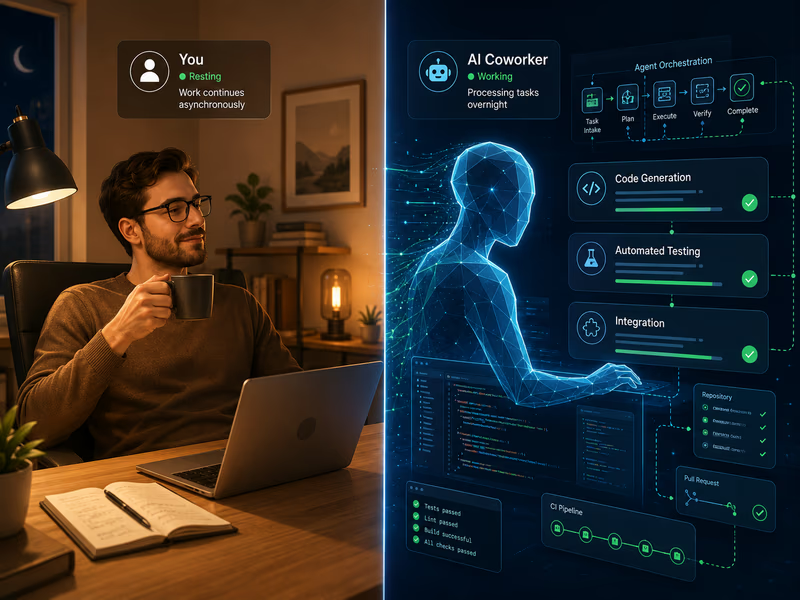
Nadella further added that the company is actively "evolving our family of Copilots from synchronous assistants to async coworkers that can execute long-running tasks across key domains."
As Build 2026 approaches, Microsoft’s public agenda heavily emphasizes agentic AI, Windows AI APIs, local model execution, and responsible AI guardrails. By introducing its own foundational models, Microsoft aims to position itself as a fully self-reliant AI powerhouse, capable of offering developers a tightly integrated, cost-effective, and highly specialized ecosystem from the silicon up.